Does the Full Moon Really Affect Sleep? What Science Says
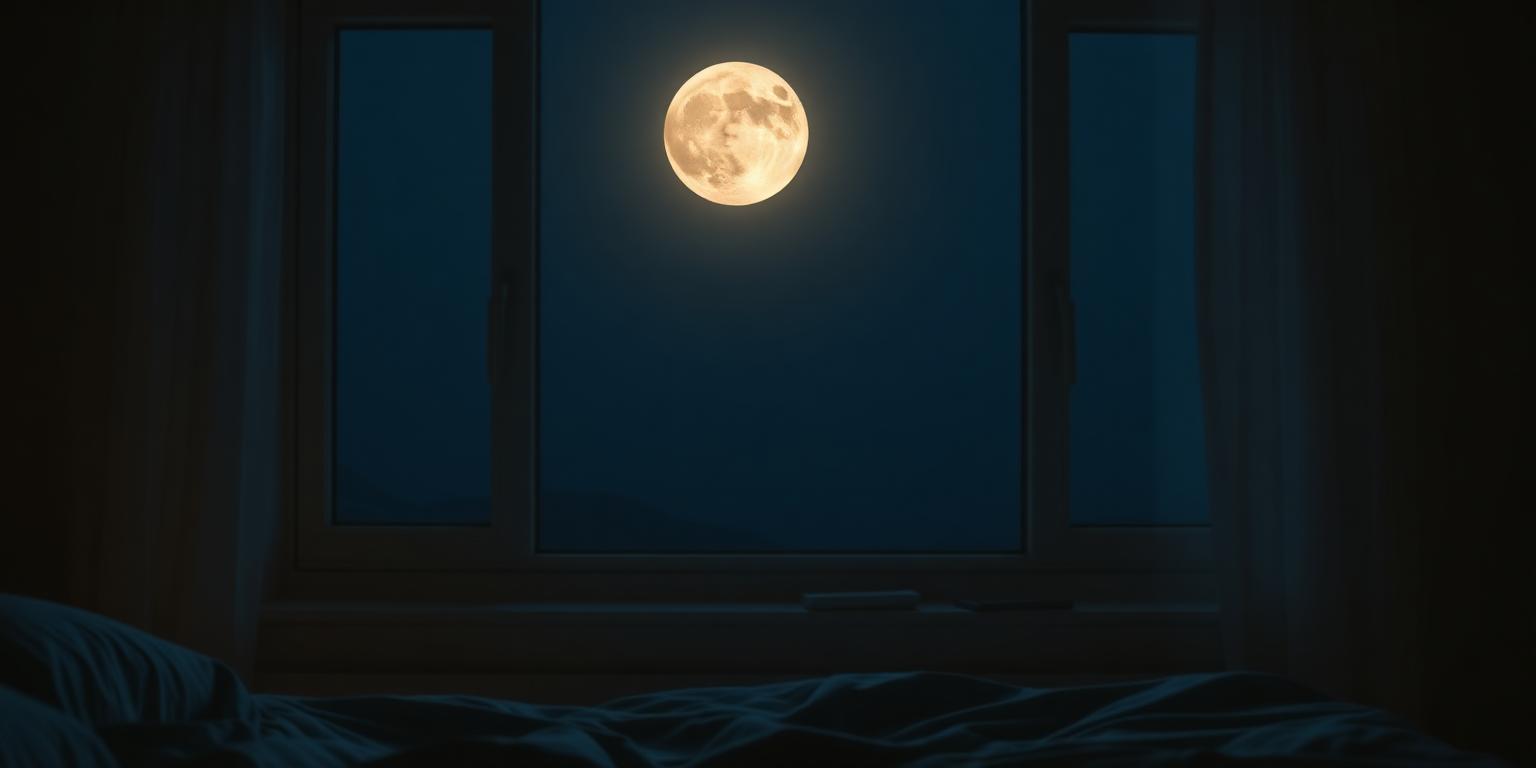
If you've ever felt more restless, vivid, or wide-awake on a full moon night, you're not alone. The belief that the full moon disrupts sleep is one of the most common folk observations across cultures. But what does the research actually say?
First: check tonight's moon phase to know where you are in the cycle. Then read on.
What the Research Shows — and Where It's Uncertain
A widely cited 2013 study in Current Biology found modest reductions in deep sleep and sleep duration around the full moon, even in controlled lab conditions. For the full numbers and methodological caveats, see our detailed breakdown in Full Moon Meditation: A Science-Based Practice.
Subsequent studies have produced mixed results. The current consensus is that the full moon may affect sleep in some people, but the effect is not universally replicated and the mechanism is unclear. The two main hypotheses:
1. Light exposure. The full moon is significantly brighter than other phases. Even through curtains, increased ambient light can suppress melatonin and delay sleep onset. This is the most biologically plausible explanation.
2. Circadian or biological rhythms. Some researchers have proposed that humans may have an internal lunar rhythm — a ~29-day biological clock — that influences sleep independent of light. This is more speculative and less supported by current evidence.
Why It Feels Real Even If the Science Is Mixed
Even if the effect size is modest or inconsistent across studies, there are good reasons it feels significant:
- Confirmation bias: We notice and remember the restless full moon nights; we don't catalog the uneventful ones.
- Light genuinely matters: If your bedroom isn't fully dark, the increased light around the full moon can affect your sleep — it's just ambient light, not magic.
- Emotional state: Full moon nights often come with heightened social activity, later evenings, or simply the expectation of restlessness. These are real factors.
What Actually Helps on Full Moon Nights
Regardless of whether the moon is causing disruption or not, these are evidence-based strategies for better sleep:
Manage light exposure. Use blackout curtains or a sleep mask. Avoid bright screens for 60 minutes before bed. The full moon's light is real — block it if it bothers you.
Lower your core temperature. A cool room (around 18°C / 65°F) promotes deeper sleep. A warm shower before bed, counterintuitively, also helps by causing your body temperature to drop afterward.
A short wind-down meditation. Even 5–10 minutes of slow breathing or body scan practice before bed measurably reduces cortisol and improves sleep onset. Check the current moon phase and try the waning or full moon practice from our meditation guide.
Consistent sleep timing. Going to bed and waking at the same time — including full moon nights — is the single most impactful factor for sleep quality.
The Bigger Picture
The moon is a useful lens for paying attention to your own cycles. Whether or not it causes sleep disruption in a statistically significant way, using the lunar cycle as a prompt for better sleep hygiene is genuinely useful. Many people find that simply noticing the moon phase makes them more attentive to their sleep, energy, and mood throughout the month.
That attentiveness is the real benefit — and it doesn't require the science to be settled.
A mindfulness practice aligned with the lunar cycle can help you sleep better and feel more grounded — whatever the moon is doing.
Discover Pausar Premium → Monthly new moon and full moon guided meditations — plus a complete 52-week mindfulness program.
Frequently asked questions
Is there scientific proof that the full moon affects sleep?
Some studies suggest modest effects (less deep sleep, longer sleep onset), but results are mixed across research. The most plausible mechanism, if real, is increased light exposure rather than anything mysterious.
Does the full moon affect everyone's sleep?
No. Individual variation is significant. Light-sensitive sleepers in bright environments are more likely to notice an effect.
What can I do to sleep better on full moon nights?
Use blackout curtains, keep your room cool, avoid screens before bed, and consider a short wind-down meditation.
When is the next full moon?
Check the exact date at fasesdalua.com.