Moon Phases and Sleep: What the Research Actually Shows
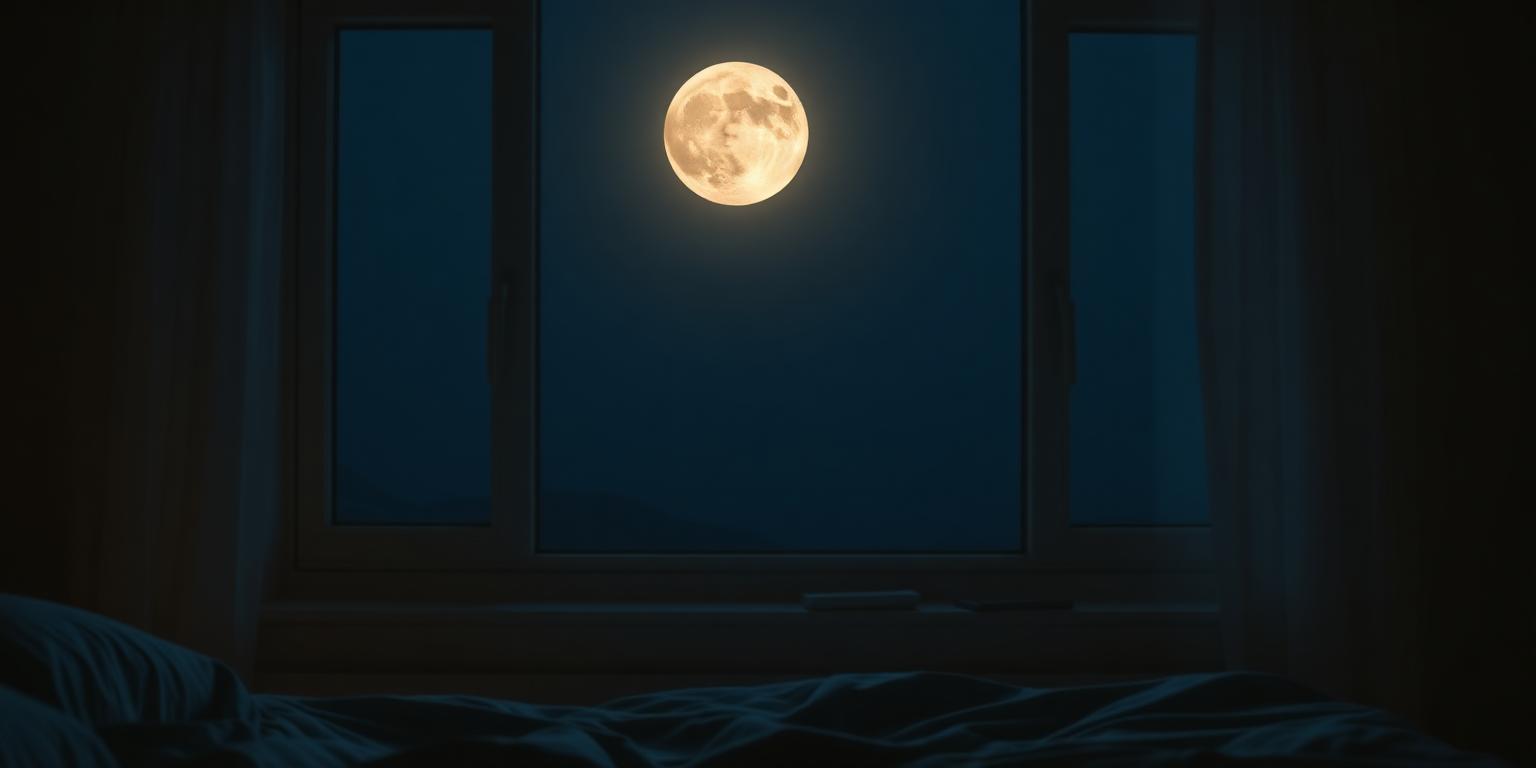
Ask a room of people if they sleep worse around the full moon, and a good number will say yes. Ask a room of sleep scientists the same question, and you'll get something more interesting: genuine disagreement.
This isn't a case of "science hasn't looked into it." Researchers have studied moon phases and sleep for decades, using EEG data, wearable sleep trackers, and large hospital cohorts. The honest summary is that the evidence is mixed — and the disagreement itself is worth understanding, because it tells you something about how science handles subtle, hard-to-measure effects.
The case for an effect
One of the most cited studies in this area is a 2013 laboratory analysis that found reduced deep sleep and later sleep onset around the full moon, even without moonlight exposure — we cover that study in detail in our science-based guide to full moon meditation.
A separate line of research points to a different mechanism entirely: not lunar gravity, but natural light. A 2021 study published in Science Advances, led by researchers at the University of Washington, tracked sleep in three communities in Argentina with varying access to electricity, alongside a group of college students in Seattle. Across all groups, people went to bed later and slept less in the days leading up to a full moon — with the effect strongest in the community with no access to artificial light at night. The researchers proposed that this reflects an old adaptation: more moonlight after dusk meant more usable hours for activity, a pattern our sleep timing may still carry.
Other research has found gender differences: some studies report reduced deep sleep and REM sleep in women around the full moon, with a different pattern in men — though results across studies are inconsistent enough that scientists are cautious about drawing firm conclusions from any single one.
The case against an effect
Not all research agrees. A large-scale analysis from the Max Planck Institute of Psychiatry examined sleep data from over a thousand volunteers across more than 2,000 nights and found no statistically significant correlation between lunar phase and sleep. The researchers went further, identifying a number of unpublished null results from other labs — studies that found no lunar effect and were simply never published, since null results are historically less likely to make it into journals. This pattern, known as publication bias, means the studies that got published and cited may not represent the full picture of what researchers have actually found.
So what should you make of this?
Three honest takeaways:
The effect, if real, is likely small — not the dramatic sleeplessness of folklore, but a modest shift in timing and depth of sleep for some people, some of the time.
Light exposure is a more plausible mechanism than any mystical lunar force — and it's one you can actually control, regardless of what the moon is doing.
Even without a settled scientific answer, using the lunar cycle as a monthly rhythm for reviewing your sleep habits is a reasonable practice — not because the moon controls your sleep, but because a recurring marker makes it easier to notice patterns you might otherwise miss.
If you do notice your sleep shifting around the full moon, a simple response — dimming lights earlier in the evening during that week, or building in a short wind-down practice — addresses the light-based explanation directly, whether or not the lunar effect turns out to be real.
Bring this practice into your month
Discover Pausar Premium → Monthly lunar meditations + a 52-week mindfulness program, at your own pace.
Related reading
- Full Moon Meditation: A Science-Based Practice — the research behind lunar meditation, including the full Cajochen (2013) citation.
- Does the Full Moon Really Affect Sleep? What Science Says — a companion overview of the same question.
Frequently asked questions
Is there scientific proof the moon affects sleep?
No single study proves it conclusively. Some well-designed studies have found modest effects on sleep timing and depth around the full moon; other equally well-designed studies have found no effect at all. The honest answer is that the evidence is genuinely mixed.
Why do some studies find an effect and others don't?
Possible reasons include differences in study design, sample size, and geography (light pollution varies enormously between locations), as well as publication bias — studies that find an effect may be more likely to get published than studies that find nothing.
If the moon doesn't directly affect sleep, why do people report sleeping worse during the full moon?
One likely explanation is simply more ambient light at night during the days around the full moon, which can delay melatonin release and affect sleep onset — an effect worth managing regardless of what phase the moon is in.
What is the 2021 Science Advances study about?
Researchers from the University of Washington and collaborators in Argentina tracked sleep across communities with different levels of access to artificial light. People slept less and went to bed later in the days before a full moon in all groups, with the effect strongest where there was no electric lighting — suggesting natural moonlight, not lunar gravity, may be the relevant factor.